
Introduction
Retail is changing fast. Customers want more transparency, faster service, safer products, and better experiences across every channel. At the same time, retailers face pressure to reduce fraud, manage inventory accurately, improve supplier coordination, and respond quickly to disruptions. This is why retail blockchain has become an important topic in modern commerce.
Retail blockchain refers to the use of blockchain technology in retail operations such as supply chain tracking, payment processing, product authentication, loyalty programs, and data sharing between partners. Instead of relying only on isolated databases owned by individual organizations, blockchain creates a shared and tamper-resistant record of transactions and events. This makes it easier for retailers, suppliers, logistics partners, and even customers to access trusted information.
While blockchain is often associated with cryptocurrency, its role in retail goes far beyond digital coins. In practice, it is increasingly valued for traceability, trust, automation, and transparency. For retailers dealing with complex supply chains and growing customer expectations, blockchain can support more reliable and efficient operations.
This article explains what retail blockchain is, how it works, where it adds value, what challenges businesses should consider, and why it matters for the future of retail.
What Is Retail Blockchain?
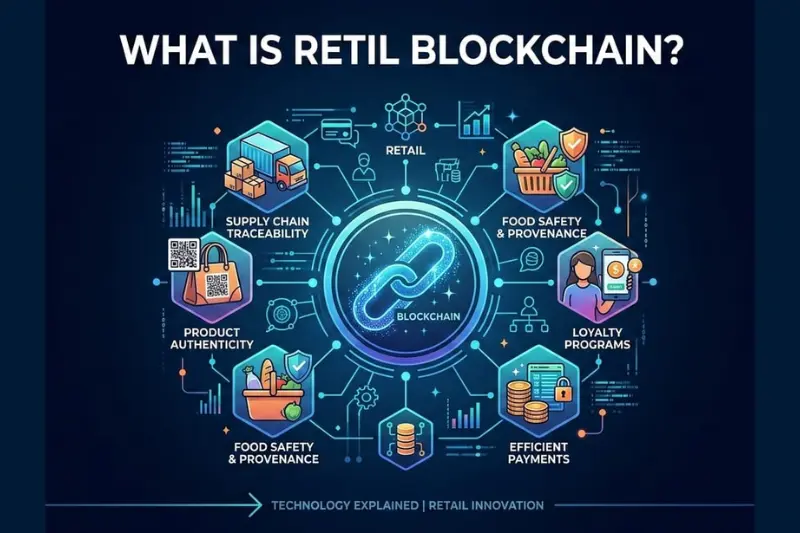
Retail blockchain is the use of blockchain systems to record, verify, and share information related to retail products, transactions, and supply chain events. A blockchain is a distributed digital ledger that stores data in blocks linked together in a secure and chronological way. Once information is recorded and confirmed, it becomes very difficult to alter.
In the retail sector, this technology can be used to follow a product from its source to the store shelf, verify authenticity, automate supplier agreements, improve customer rewards systems, and reduce disputes caused by inconsistent records.
Unlike a traditional database controlled by one organization, a blockchain network can be shared among multiple participants. This matters in retail because products often pass through many hands, including manufacturers, suppliers, warehouses, transport providers, customs authorities, and retailers. When all authorized participants work from the same trusted record, decisions become faster and more accurate.
Why Retailers Are Exploring Blockchain
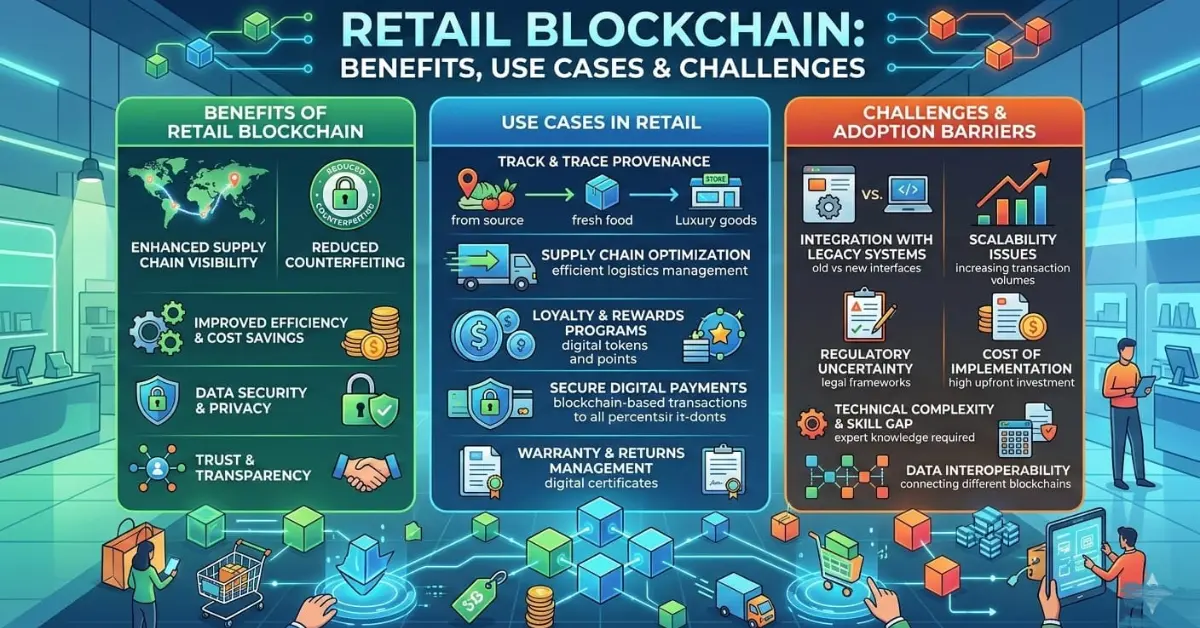
Retailers are exploring blockchain because the industry depends on trust, speed, and coordination. Traditional systems often create data silos, delays, errors, and blind spots. These problems become even bigger in global supply chains and omnichannel business models.
Several factors are driving interest in retail blockchain:
- rising customer demand for product transparency
- growing concern about counterfeit goods
- the need for faster product recalls and better food safety
- pressure to reduce fraud and administrative costs
- demand for real-time inventory visibility
- interest in more flexible and secure loyalty programs
- the need to improve compliance and reporting
Retail businesses that handle large volumes of products and multiple suppliers often struggle with fragmented information. Blockchain offers a way to create a single, shared record of important events, which can improve trust between all parties involved.
May be you like it:
Hi Tech Nails: Stylish, Fun, Long-Lasting Nail Tips Today
Renas Tech: Easy-to-Use Tools for Learning and Work Success
Tech Tales Pro-Reed: Beginner-Friendly Tech Guides Today
Retail Blockchain vs Traditional Databases
One of the most important questions is whether blockchain is actually necessary. Not every retail business needs it.
Traditional databases are usually enough when one company fully controls the system, trusts all internal users, and does not need a shared record across many external parties. They are often faster, cheaper, and easier to manage.
Blockchain becomes more useful when:
- multiple organizations need to share the same data
- trust between parties is limited
- records must be traceable and tamper-resistant
- auditability is important
- product provenance matters
- automation across partners is needed
In other words, blockchain is most valuable when the business problem involves coordination across a network rather than storage within a single company. This is why blockchain is especially relevant in supply chain-heavy retail environments.
How Retail Blockchain Works
Retail blockchain works by recording verified events across a distributed network. Each event is added as a new entry and linked to the previous one, creating an ordered history of actions.
A simple retail blockchain process may look like this:
Product origin is recorded
A manufacturer creates a product and records its origin, batch number, raw material details, or certification information on the blockchain.
Shipment information is added
As the product moves through the supply chain, logistics partners add shipping, storage, and delivery updates.
Warehouse and inventory data are updated
When goods arrive at a warehouse or retail location, inventory records are updated in real time.
Retail transactions are verified
Once a customer purchases the product, the sale can be linked to the product’s traceability history.
Smart contracts automate actions
If a certain condition is met, such as confirmed delivery, a smart contract can automatically trigger payment, alerts, or other business actions.
Customers can verify product information
Through QR codes, NFC tags, or digital product passports, customers may be able to check a product’s journey, authenticity, or sustainability claims.
This process reduces dependency on disconnected spreadsheets, manual reconciliations, and delayed communication between parties.
Key Use Cases of Retail Blockchain
Retail blockchain can support a wide range of business functions. Some use cases are already active in the market, while others are still developing.
Supply Chain Traceability
This is one of the strongest use cases for blockchain in retail. Retailers can track products from source to shelf and record every important movement along the way. This helps improve accountability and transparency.
Traceability is especially useful in food, fashion, electronics, pharmaceuticals, and luxury goods, where origin and handling conditions matter.
Counterfeit Prevention
Fake products damage brand value and consumer trust. Blockchain can help reduce this problem by creating a verifiable digital record of a product’s origin and movement. Customers and retailers can check whether an item is genuine by linking physical products to secure digital identities.
This is highly relevant in sectors such as luxury retail, beauty, jewelry, and branded consumer goods.
Food Safety and Product Recalls
In grocery and food retail, speed matters when contamination risks appear. Blockchain can help trace a product back to its source much faster than legacy systems. This allows retailers to isolate affected batches quickly, reduce waste, and protect consumers.
Inventory Management
Real-time updates across supply chain participants can improve inventory accuracy. Retailers can reduce stockouts, avoid overstocking, and make better replenishment decisions based on shared and verified data.
Loyalty Programs
Traditional loyalty systems are often fragmented and underused. Blockchain can support secure, transparent, and flexible reward structures. In some cases, retailers can create tokenized points that are easier to track, redeem, or even use across partner networks.
Smart Contracts for Supplier Agreements
Smart contracts are programmable agreements that execute automatically when conditions are met. In retail, they can help automate supplier payments, delivery confirmations, refunds, and compliance checks. This reduces delays, disputes, and manual processing.
Cross-Border Payments
Retailers involved in international trade may benefit from faster and more transparent payment systems powered by blockchain. These systems can reduce settlement delays and lower reliance on intermediaries, especially in complex supplier networks.
Product Authentication and Digital Passports
Retailers can assign products a digital identity that stores key details such as origin, materials, certifications, service history, and ownership transfer. This is becoming especially valuable in resale markets and premium goods.
Benefits of Retail Blockchain
The growing interest in retail blockchain comes from its potential to solve real operational problems. When used in the right context, it can create meaningful business value.
Greater Transparency
Blockchain gives authorized participants access to a shared version of the truth. This improves visibility across the retail ecosystem and helps reduce confusion caused by inconsistent records.
Improved Trust
Customers increasingly want proof, not just claims. Blockchain can support trust by making product journeys, sourcing information, and authenticity records easier to verify.
Better Fraud Resistance
Because blockchain records are difficult to alter, the system can reduce certain forms of fraud, manipulation, and counterfeit activity.
Faster Auditing and Compliance
Retailers often face pressure to show compliance with safety, sourcing, and regulatory requirements. Blockchain can make audits easier by providing a reliable and time-stamped history of transactions and product events.
More Efficient Operations
Shared data can reduce paperwork, manual reconciliation, and communication delays. This can improve coordination between suppliers, retailers, and logistics providers.
Stronger Customer Engagement
When blockchain is used in loyalty systems, product storytelling, or digital authentication, it can create richer customer experiences and deeper brand relationships.
Better Decision-Making
More reliable data leads to better forecasts, planning, and operational decisions. When retail teams trust the information they are using, they can respond more quickly to disruptions and opportunities.
Challenges and Limitations of Retail Blockchain
Although blockchain offers strong potential, it is not a magic solution. Retailers need to understand its challenges before investing in it.
High Implementation Complexity
Building and deploying blockchain systems requires technical expertise, strategic planning, and coordination across multiple stakeholders. This is often more complex than upgrading a traditional database.
Integration with Legacy Systems
Many retailers already use ERP, POS, CRM, warehouse management, and logistics platforms. Connecting blockchain to these existing systems can be difficult and time-consuming.
Cost and ROI Concerns
Blockchain projects may involve significant investment in development, infrastructure, integration, governance, and training. For some businesses, especially smaller retailers, the return on investment may not be immediate or clear.
Data Quality Risks
Blockchain protects stored data, but it does not automatically guarantee that the original data is accurate. If incorrect information is entered, that error can become permanently recorded. This is often described as the “garbage in, garbage forever” problem.
Scalability Issues
Some blockchain systems may struggle with high transaction volumes, low latency requirements, or rapid scaling needs. Retail environments with massive daily transactions must choose their architecture carefully.
Privacy and Access Control
Retailers handle sensitive customer, supplier, and pricing information. Not every participant should see every piece of data. This means privacy design, permission settings, and governance policies are essential.
Change Management
New technology only works if people use it correctly. Staff training, process redesign, and internal alignment are critical for successful blockchain adoption.
Types of Blockchain Used in Retail
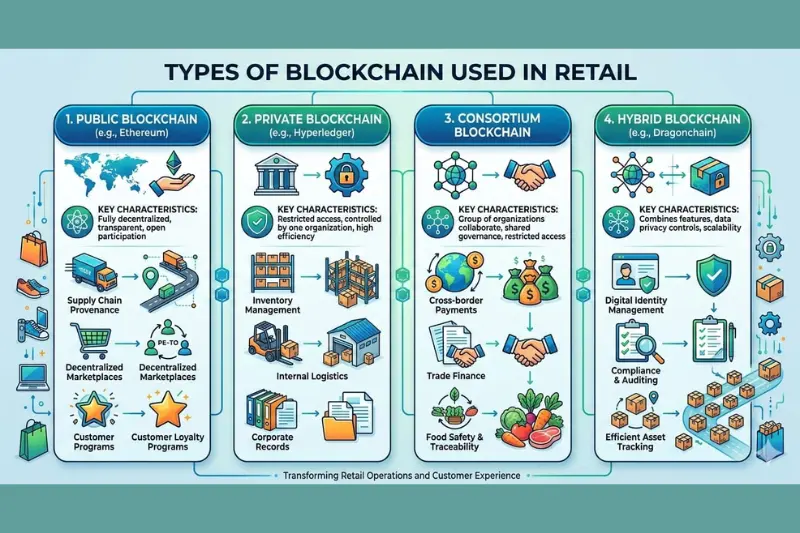
Retail businesses usually choose from three main blockchain models.
Public Blockchain
A public blockchain is open to anyone. It offers high transparency but may not suit retailers that need strong privacy and controlled participation.
Private Blockchain
A private blockchain is managed by one organization or a selected operator. It gives more control over access, performance, and governance.
Consortium Blockchain
A consortium blockchain is shared by a group of trusted organizations. This model is often well suited for retail supply chains because it balances collaboration with controlled access.
In many retail scenarios, private or consortium blockchains are more practical than fully public networks.
Real-World Examples of Retail Blockchain
Several major companies have already demonstrated how blockchain can improve retail processes.
Walmart
Walmart has used blockchain to improve food traceability and freight invoice management. In supply chain operations, blockchain has helped reduce disputes, improve tracking speed, and create more reliable records across a large network of partners.
Carrefour
Carrefour has used blockchain to give consumers more visibility into product origin and production details. This has helped strengthen trust and transparency, especially in food and organic product lines.
De Beers
Although known for diamonds rather than general retail, De Beers offers an important example of blockchain-based provenance tracking. Its system shows how digital records can support authenticity, sourcing confidence, and customer trust in high-value goods.
Luxury Retail and Digital Product Passports
Luxury brands are increasingly using blockchain-backed digital passports to verify authenticity, document ownership, and support resale ecosystems. This use case is likely to grow as customers demand more transparency and proof of value.
A Practical Adoption Roadmap for Retailers
Retailers considering blockchain should avoid rushing into implementation. A phased approach is usually more effective.
Step 1: Define the business problem
Start with a real operational issue such as counterfeit prevention, poor traceability, supplier disputes, or recall delays.
Step 2: Choose the right use case
Select a use case where blockchain offers a clear advantage over conventional systems.
Step 3: Identify stakeholders
Map all internal and external participants who will need to provide, verify, or access data.
Step 4: Select the blockchain model
Choose between public, private, or consortium blockchain based on privacy, performance, and governance needs.
Step 5: Build a pilot
Run a limited pilot before scaling. This helps test workflows, data quality, user experience, and business value.
Step 6: Integrate existing systems
Connect the blockchain solution with current retail platforms such as POS, ERP, CRM, IoT, and warehouse systems.
Step 7: Train teams and monitor performance
User adoption matters. Staff should understand both the purpose and the process of the system.
Step 8: Measure ROI and expand carefully
Evaluate whether the solution improves speed, trust, accuracy, compliance, or cost efficiency before expanding further.
Is Retail Blockchain Right for Every Business?

The simple answer is no. Retail blockchain is not automatically the best solution for every retailer.
It makes the most sense when:
- many parties need shared access to trusted data
- traceability is critical
- fraud or counterfeit risk is high
- compliance and auditability matter
- product origin affects buying decisions
It may not be the right choice when:
- one business controls the full process
- a normal database can solve the problem
- budgets are tight
- transaction speed is more important than shared verification
- the use case does not require immutability or multi-party trust
The best approach is not to adopt blockchain because it is trendy. Retailers should adopt it only when it solves a real business problem better than traditional alternatives.
The Future of Retail Blockchain
The future of retail blockchain is likely to be shaped by practical value rather than hype. As the technology matures, more retailers may use it for focused applications where trust, traceability, and automation deliver measurable benefits.
Areas with strong future potential include:
- digital product passports
- food safety and recall management
- sustainable sourcing verification
- luxury resale authentication
- multi-brand loyalty ecosystems
- IoT-connected supply chain monitoring
- automated compliance reporting
The retailers most likely to benefit are those with complex supply chains, strong brand protection needs, and a clear strategy for data collaboration.
May be you like it:
Nurture Tech Tips EmbedTree: Easy Guide for Beginners
Discover Major Trends in Technology Togtechify for Beginners
Guide Digital Marketing for Small Businesses by G2G Today 24
FAQs on Retail Blockchain:
What is retail blockchain?
Retail blockchain is a secure digital ledger used to track products, transactions, and supply chain data.
How does blockchain help retailers?
It improves transparency, traceability, security, and operational efficiency.
Can blockchain reduce counterfeit products?
Yes, it helps verify product origin and authenticity across the supply chain.
Is blockchain useful for inventory management?
Yes, it can improve inventory accuracy and real-time stock visibility.
Does retail blockchain support loyalty programs?
Yes, it can make loyalty rewards more secure, flexible, and transparent.
Is blockchain in retail only for large businesses?
No, both large and growing retailers can use it depending on their needs.
Can blockchain improve food safety in retail?
Yes, it helps trace food products quickly and supports faster recalls.
What is a smart contract in retail blockchain?
It is an automated digital agreement that executes actions when conditions are met.
Is blockchain better than a traditional database?
It is better when multiple parties need shared, trusted, and tamper-resistant records.
What are the main challenges of retail blockchain?
The main challenges are cost, integration, scalability, and staff adoption.
Conclusion
Retail blockchain is more than a buzzword. It represents a practical approach to improving transparency, trust, traceability, and coordination across modern retail ecosystems. From supply chain monitoring and counterfeit prevention to loyalty innovation and smart contract automation, blockchain offers several meaningful use cases.
At the same time, successful adoption depends on careful planning. Retailers must weigh benefits against costs, integration demands, governance requirements, and actual business needs. Blockchain is not necessary for every company, but for the right use cases, it can deliver long-term operational and strategic value.
As retail becomes more connected, data-driven, and accountability-focused, blockchain is likely to play a growing role in how businesses manage products, partners, and customer trust. The most effective retail strategies will not treat blockchain as a trend, but as a tool to solve specific, high-value problems.
May be you like it:
Togtechify: Simple & Latest Tech News for Everyone
Turner Tech: Smart Automation for Faster Daily Work Flow
Tile Tech Pavers: Strong, Stylish, Durable for Your Outdoor Space