
Introduction:
Deep offshore technology is the special equipment and methods we use to explore and take out oil, gas, and other resources from the deep parts of the ocean.
Example: Imagine a giant ship floating on the sea while machines drill miles down under the water to reach oil hidden beneath the ocean floor. That’s deep offshore technology in action!
What is Deep Offshore Technology?
Deep Offshore Technology is the set of tools, machines, and methods used to explore and extract oil, gas, and other resources from the deep parts of the ocean.
In simple terms, it allows engineers to safely work miles under the sea, where the water is very deep and conditions are extreme.
Example: Imagine a giant ship floating on the ocean while robots and drills reach down thousands of meters to collect oil from the ocean floor.
It is important because it provides energy, supports jobs, and helps scientific research in the ocean.
Why is deep offshore technology expensive?
Deep offshore technology is expensive because working deep under the ocean is very challenging.
Here’s why:
- Special equipment: Drilling rigs, floating platforms, and underwater robots cost a lot to build.
- Harsh conditions: Extreme pressure and cold require strong, high-tech materials.
- Skilled workers: Engineers and technicians with special training are needed.
- Safety measures: Advanced systems are needed to prevent accidents and environmental damage.
Understanding the Basics
Difference Between Shallow and Deep Offshore
Shallow offshore means working in water less than 500 meters deep. Deep offshore is much deeper—more than 500 meters!
Example: Think of shallow water like a swimming pool, and deep offshore like diving into the deep ocean where sunlight barely reaches.
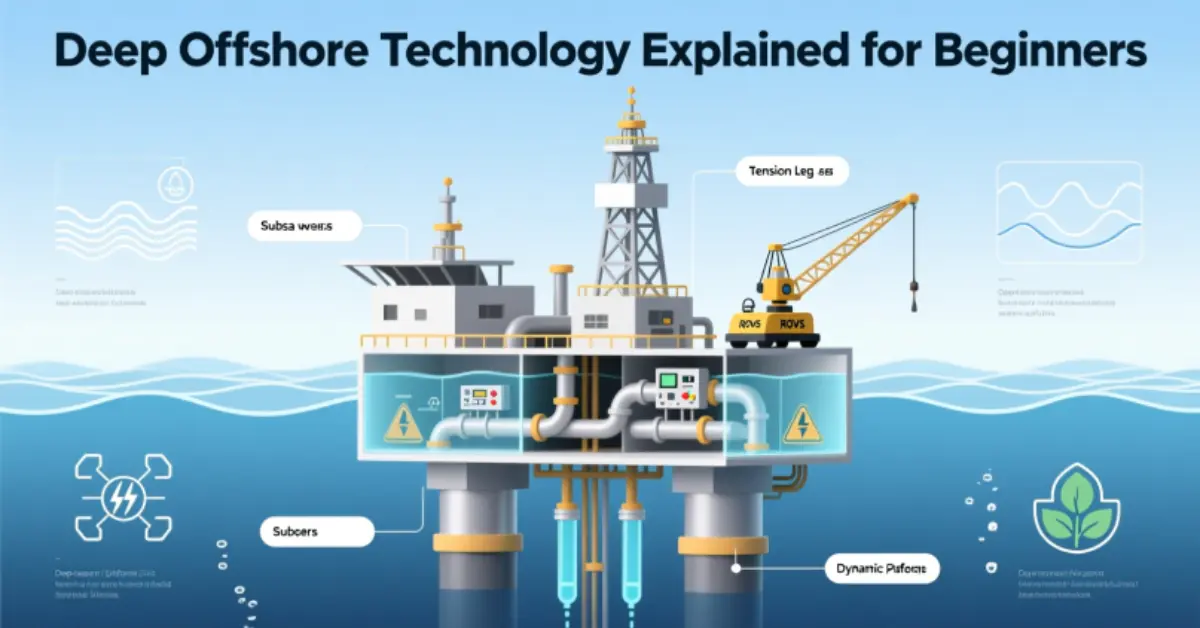
Key Components of Deep Offshore Technology
To work in such deep waters, engineers use special tools and machines:
- Drilling Rigs and Platforms – Big structures that drill into the ocean floor to reach oil and gas.
- Subsea Equipment – Pipes, valves, and underwater robots that help extract resources safely.
- Floating Production Systems – Platforms that float above deep-water wells and store the oil or gas.
Example: The Shell Perdido platform in the Gulf of Mexico is one of the deepest offshore platforms in the world.
May be you like it:
CNA Test Prep Online – Pass Your Exam with Confidence
Renas Tech: Easy-to-Use Tools for Learning and Work Success
Tech Tales Pro-Reed: Beginner-Friendly Tech Guides Today
How Deep Offshore Technology Works
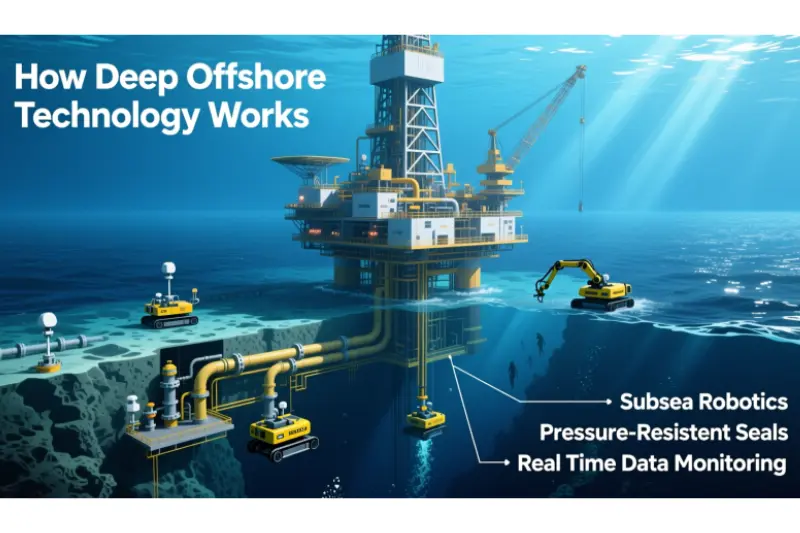
Deep offshore technology works in several steps to safely find and extract resources from the ocean floor. Let’s break it down.
Exploration
- Before drilling, engineers need to find oil or gas under the sea.
- They use sonar, satellites, and sensors to map the ocean floor.
Example: Seismic waves are sent through the water and ground to create a map of what lies beneath.
Drilling
- Once the location is found, drilling begins:
- A drill goes through the ocean floor to reach oil or gas.
- Pipes are inserted to secure the well.
- Remote-operated vehicles (ROVs) help monitor everything safely.
Tip: ROVs reduce risk because humans don’t need to work directly under extreme pressure.
Extraction
- Oil and gas are pumped up to the surface.
- Floating Production Storage and Offloading units (FPSOs) store the resources before sending them to land.
Example: FPSOs look like floating factories, processing and storing oil right in the middle of the ocean.
Safety Measures
- Working deep underwater is risky, so safety is very important:
- Blowout preventers (BOPs) stop uncontrolled oil spills.
- Emergency plans are in place for quick evacuation.
Example: The Deepwater Horizon disaster in 2010 taught the industry important lessons about safety and risk management.
Technologies Used in Deep Offshore
Deep offshore operations use advanced technology to explore, drill, and extract resources safely. Here are the main tools:
ROVs (Remotely Operated Vehicles)
- Underwater robots controlled from the surface.
- They inspect equipment, fix problems, and monitor the ocean floor.
Example: ROVs can repair a broken pipe 2,000 meters below the sea without putting humans at risk.
AUVs (Autonomous Underwater Vehicles)
- These robots move on their own and map the ocean floor.
- Useful for studying underwater conditions and finding new drilling spots.
Advanced Sensors
- Measure pressure, temperature, and detect leaks.
- Help engineers make quick decisions and prevent accidents.
Floating Platforms & FPSOs
- Floating rigs store and process oil or gas at sea.
- Can operate in water thousands of meters deep.
Example: The Perdido platform in the Gulf of Mexico is one of the deepest floating rigs in the world.
Tip: Using these tools makes deep offshore work safer, faster, and more efficient.
Challenges in Deep Offshore Operations
Working deep under the ocean is not easy. Engineers face many challenges:
High Costs
- Building rigs, robots, and floating platforms is very expensive.
- Example: A single deep offshore rig can cost billions of dollars to build and maintain.
Extreme Conditions
- Very high pressure and low temperatures make work difficult.
- Equipment must be strong enough to survive harsh underwater conditions.
Example: At 3,000 meters depth, the pressure is over 300 times higher than at sea level!
Environmental Risks
- Oil spills or leaks can harm marine life and ecosystems.
- Engineers must follow strict safety and environmental regulations.
Example: The Deepwater Horizon accident in 2010 caused serious environmental damage.
Technical Complexity
- Deep offshore technology requires highly trained engineers and technicians.
- Every step—exploration, drilling, extraction—must be carefully monitored.
Tip: Careful planning, advanced technology, and safety measures help reduce these risks.
Real-Life Applications and Benefits
Deep offshore technology is more than just drilling for oil. It has many real-world uses and benefits.
Energy Production
- Provides oil and gas for electricity, heating, and transportation.
- Example: Many countries rely on offshore oil to fuel cars, airplanes, and power plants.
Job Creation
- Engineers, technicians, marine biologists, and support staff all work in offshore projects.
- Example: Offshore platforms create thousands of jobs in local and global communities.
Scientific Research
- Helps study the deep-sea environment and marine life.
- Example: Subsea sensors and ROVs collect data on underwater ecosystems, which scientists use for research.
Supporting Renewable Energy
- Technology used in deep offshore oil also helps install offshore wind farms and tidal energy projects.
- Tip: Skills and equipment from deep offshore oil are now helping the world go green.
Engaging Question: Did you know that some of the same technology that drills for oil is now helping build clean energy projects at sea?
Future of Deep Offshore Technology
The future of deep offshore technology looks exciting. Engineers and scientists are constantly improving tools and methods.
Automation and AI
- Robots and AI are helping operate rigs more safely and efficiently.
- Example: AI can monitor sensors in real time and alert engineers to potential problems.
Renewable Energy Integration
- Offshore wind and tidal energy are using deep-sea technology for installation and maintenance.
- Example: Floating wind farms are built using techniques similar to oil platforms.
Sustainability and Environment
- New methods focus on reducing environmental impact.
- Engineers design safer equipment to prevent leaks and spills.
Engaging Question: Could robots fully replace humans in deep-sea operations soon? With current technology, it’s becoming more possible every year!
May be you like it:
Nurture Tech Tips EmbedTree: Easy Guide for Beginners
Discover Major Trends in Technology Togtechify for Beginners
Guide Digital Marketing for Small Businesses by G2G Today 24
FAQs: Deep Offshore Technology
What is deep offshore technology?
It’s the technology used to explore and extract oil, gas, and resources from deep ocean areas.
How deep is “deep offshore”?
Any water deeper than 500 meters is considered deep offshore.
What tools are used underwater?
ROVs, AUVs, sensors, and subsea equipment help engineers work safely underwater.
Why is it important?
It provides energy, creates jobs, and supports marine research.
Is deep offshore drilling safe?
Yes, with modern technology and safety measures, risks are reduced.
What is an ROV?
A remotely operated vehicle is a robot that works underwater without humans being there.
What is an FPSO?
A Floating Production Storage and Offloading unit stores and processes oil at sea.
What are the main challenges?
High costs, extreme pressure, environmental risks, and technical complexity.
Can deep offshore technology help renewable energy?
Yes, the same technology is used in offshore wind and tidal energy projects.
What does the future look like?
AI, automation, and sustainable methods are making deep offshore technology safer and greener.
Conclusion
Deep offshore technology helps us explore and extract oil, gas, and other resources from the deep ocean safely and efficiently.
Key Takeaways:
- Advanced tools like ROVs, AUVs, and floating platforms make deep-sea operations possible.
- Safety and environmental protection are top priorities.
- This technology supports energy production, jobs, and scientific research.
Final Thought: Next time you look at the ocean, imagine the incredible machines working miles below the surface to bring energy to our world!
May be you like it:
Togtechify: Simple & Latest Tech News for Everyone
Turner Tech: Smart Automation for Faster Daily Work Flow
Tile Tech Pavers: Strong, Stylish, Durable for Your Outdoor Space