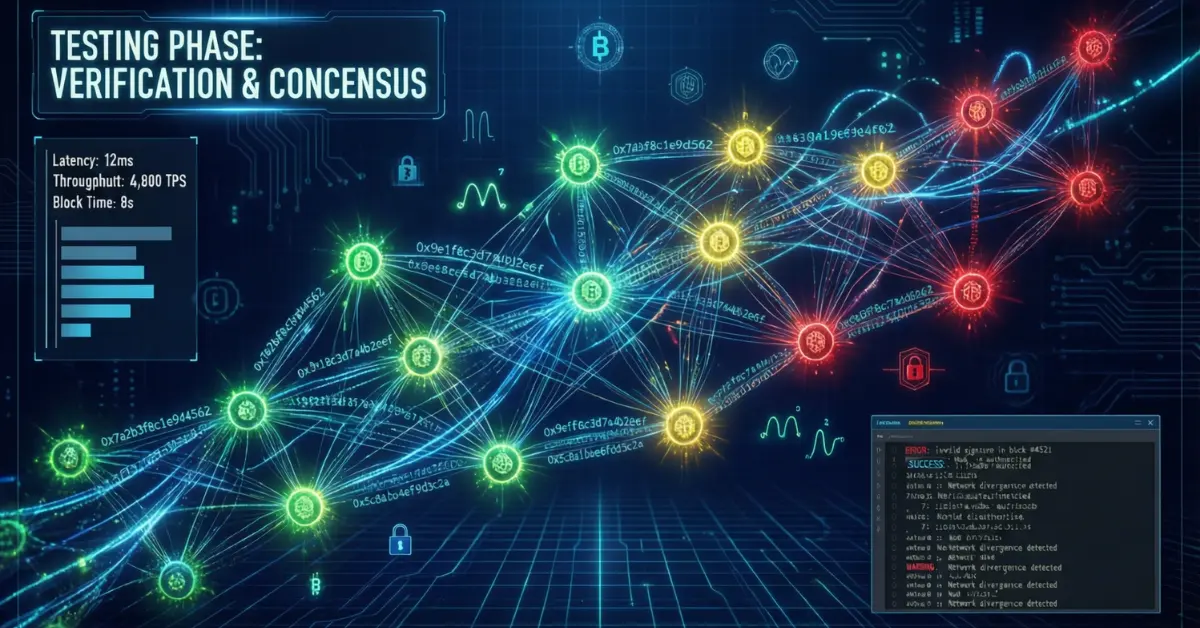

Introduction
As blockchain technology continues to power cryptocurrencies, smart contracts, DeFi platforms, and enterprise solutions, blockchain testing has become a critical process for ensuring security, reliability, and performance. Unlike traditional software, blockchain systems are decentralized, immutable, and highly sensitive to errors meaning even a small bug can lead to massive financial and reputational losses.
That’s why businesses today are investing heavily in blockchain application testing before launching their platforms.
What Is Blockchain Testing?
Blockchain testing is the process of verifying and validating blockchain-based applications, smart contracts, and distributed ledger systems to ensure they function correctly, securely, and efficiently.

It focuses on checking:
- Data integrity
- Security vulnerabilities
- Smart contract accuracy
- Transaction performance
- Network behavior under load
Because blockchain systems cannot easily be modified after deployment, testing is not optional.it is essential.
May be you like it:
Hi Tech Nails: Stylish, Fun, Long-Lasting Nail Tips Today
Renas Tech: Easy-to-Use Tools for Learning and Work Success
Tech Tales Pro-Reed: Beginner-Friendly Tech Guides Today
Why Blockchain Testing Is Important
Blockchain platforms often manage sensitive financial transactions and digital assets. A single flaw can result in:
- Financial loss
- Security breaches
- Smart contract exploits
- Loss of user trust
Blockchain software testing helps prevent these risks by identifying issues early in development, before they become costly problems.
Key Types of Blockchain Testing
Functional Testing
This ensures all blockchain features work as expected, including:
- Transaction validation
- Block creation
- Smart contract execution
- Consensus mechanisms
Security Testing
Security is the biggest priority in blockchain testing. This includes checking for:
- Smart contract vulnerabilities
- Private key protection
- 51% attack risks
- Data tampering attempts
Performance and Load Testing
Blockchain networks must handle large volumes of transactions. Testing evaluates:
- Transaction speed
- Network latency
- Scalability
- Behavior under high traffic
Smart Contract Testing
Smart contracts are self-executing codes. Errors here are permanent once deployed. Testing verifies:
- Logic accuracy
- Gas usage efficiency
- Failure scenarios
- Integration with other contracts
Integration Testing
Blockchain applications often connect with:
- APIs
- Payment gateways
- Front-end systems
- Databases
Testing ensures seamless interaction between blockchain and external systems.
Challenges in Blockchain Testing
Testing blockchain systems is more complex than traditional applications due to:
- Decentralized architecture
- Lack of standard testing tools
- Immutability of data
- Complex consensus algorithms
- Security risks in smart contracts
This is why specialized blockchain testing tools and experienced QA professionals are required.
Tools Used in Blockchain Testing
Some commonly used tools include:
- Truffle (for smart contract testing)
- Ganache (local blockchain testing)
- Hyperledger Caliper (performance testing)
- Mythril (security analysis)
- Selenium (for blockchain app UI testing)
These tools help testers simulate networks, analyze code, and detect vulnerabilities.
Best Practices for Effective Blockchain Testing
To ensure reliable systems, organizations should:
- Start testing early in development
- Perform regular security audits
- Test on multiple network environments
- Use automated testing tools
- Conduct smart contract code reviews
A strong testing strategy reduces risk and increases user confidence.
Future of Blockchain Testing

As blockchain adoption grows in banking, supply chain, healthcare, and government sectors, blockchain quality assurance will become even more critical. AI-driven testing, automated security scans, and improved testing frameworks are shaping the future of this field.
May be you like it:
Nurture Tech Tips EmbedTree: Easy Guide for Beginners
Discover Major Trends in Technology Togtechify for Beginners
Guide Digital Marketing for Small Businesses by G2G Today 24
FAQs About Blockchain Testing
What is blockchain testing?
Blockchain testing is the process of verifying the functionality, security, performance, and reliability of blockchain applications, smart contracts, and distributed ledger systems.
Why is blockchain testing important?
Blockchain systems handle sensitive data and financial transactions. Testing helps prevent security breaches, smart contract bugs, and performance failures that could lead to major losses.
What are the main types of blockchain testing?
The key types include:
Functional testing
Security testing
Performance testing
Smart contract testing
Integration testing
How is blockchain testing different from traditional software testing?
Blockchain testing deals with decentralized systems, consensus mechanisms, immutability, and cryptographic security, which make it more complex than regular application testing.
What is smart contract testing?
Smart contract testing checks the logic, accuracy, and security of self-executing code on the blockchain to ensure it works correctly and has no vulnerabilities.
What tools are used for blockchain testing?
Popular tools include:
Truffle
Ganache
Hyperledger Caliper
Mythril
Selenium (for front-end testing)
What challenges are faced in blockchain testing?
Common challenges include lack of standard tools, complex architecture, security risks, network scalability issues, and the irreversible nature of blockchain transactions.
What is performance testing in blockchain?
Performance testing measures transaction speed, network latency, scalability, and system stability under heavy loads.
Can blockchain applications be updated after deployment?
Most blockchain data and smart contracts are immutable, meaning they cannot be easily changed. That’s why thorough testing before deployment is critical.
Who needs blockchain testing services?
Businesses developing cryptocurrencies, DeFi platforms, NFT marketplaces, enterprise blockchain systems, and fintech applications all require blockchain testing.
Does blockchain testing improve security?
Yes. Security testing identifies vulnerabilities, protects private keys, prevents attacks, and ensures smart contracts are safe from exploits.
Conclusion
Blockchain testing is the foundation of secure and trustworthy decentralized systems. With smart contracts managing real assets and blockchain networks handling millions of transactions, there is no room for error. Proper testing ensures performance, security, and long-term success.
For any organization building blockchain solutions, investing in professional testing is not just a technical step.it is a business necessity.
May be you like it:
Togtechify: Simple & Latest Tech News for Everyone
Turner Tech: Smart Automation for Faster Daily Work Flow
Tile Tech Pavers: Strong, Stylish, Durable for Your Outdoor Space