
Introduction
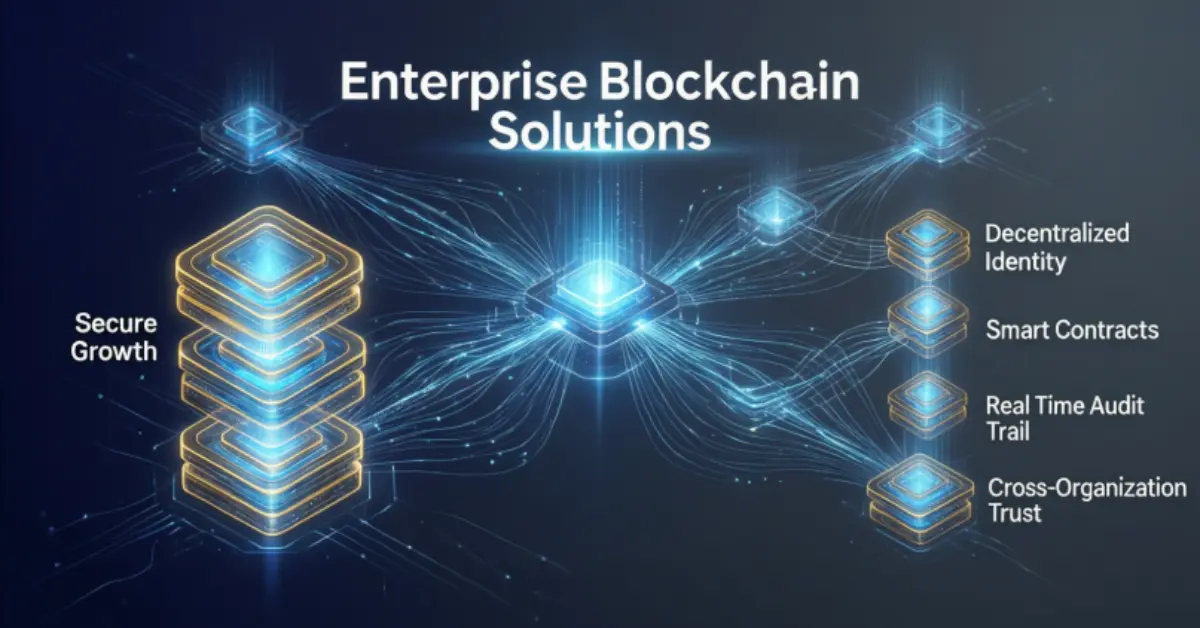
In today’s digital economy, enterprises are under constant pressure to improve security, transparency, and operational efficiency. Traditional systems often struggle with data silos, fraud risks, and lack of trust between stakeholders. This is where enterprise blockchain solutions are redefining how modern organizations operate.
From finance and healthcare to supply chain and government sectors, blockchain is no longer just about cryptocurrency — it has become a powerful foundation for secure, decentralized, and tamper-proof business ecosystems.
What Are Enterprise Blockchain Solutions?
Enterprise blockchain solutions are business-focused blockchain systems designed to meet corporate requirements such as:
- High security
- Data privacy and permission controls
- Scalability
- Regulatory compliance
- Integration with existing enterprise systems
Unlike public blockchains, enterprise blockchains often use permissioned networks, where only authorized participants can access data or perform transactions. This makes them ideal for industries that handle sensitive information.
Why Enterprises Are Adopting Blockchain Technology
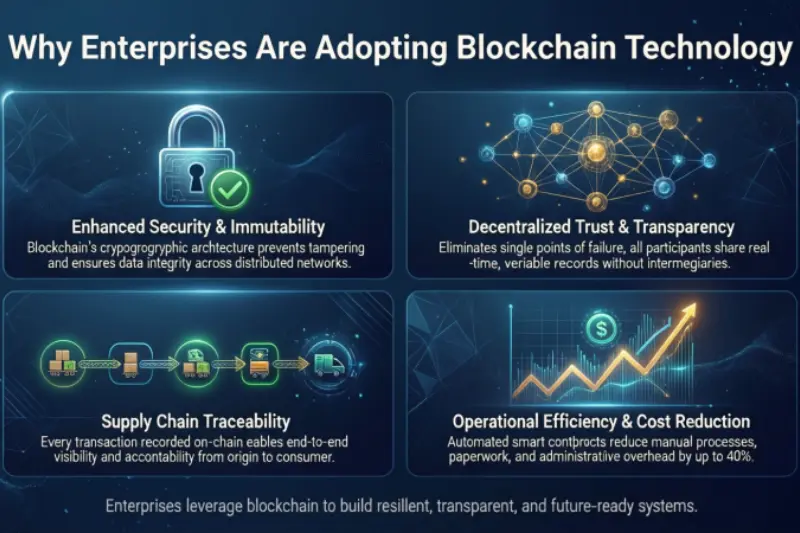
Organizations worldwide are investing in blockchain because it solves long-standing business challenges.
Enhanced Security
Blockchain uses advanced cryptography and distributed architecture, making data nearly impossible to alter without detection. This drastically reduces fraud, cyberattacks, and internal data manipulation.
Complete Transparency
Every transaction is recorded in a shared ledger visible to approved participants. This improves auditability, trust between partners, and regulatory reporting.
Operational Efficiency
Smart contracts automate business processes, eliminating manual paperwork, delays, and human error. Transactions that once took days can be completed in minutes.
Cost Reduction
By removing intermediaries and streamlining processes, enterprises can significantly reduce operational and administrative costs.
Improved Traceability
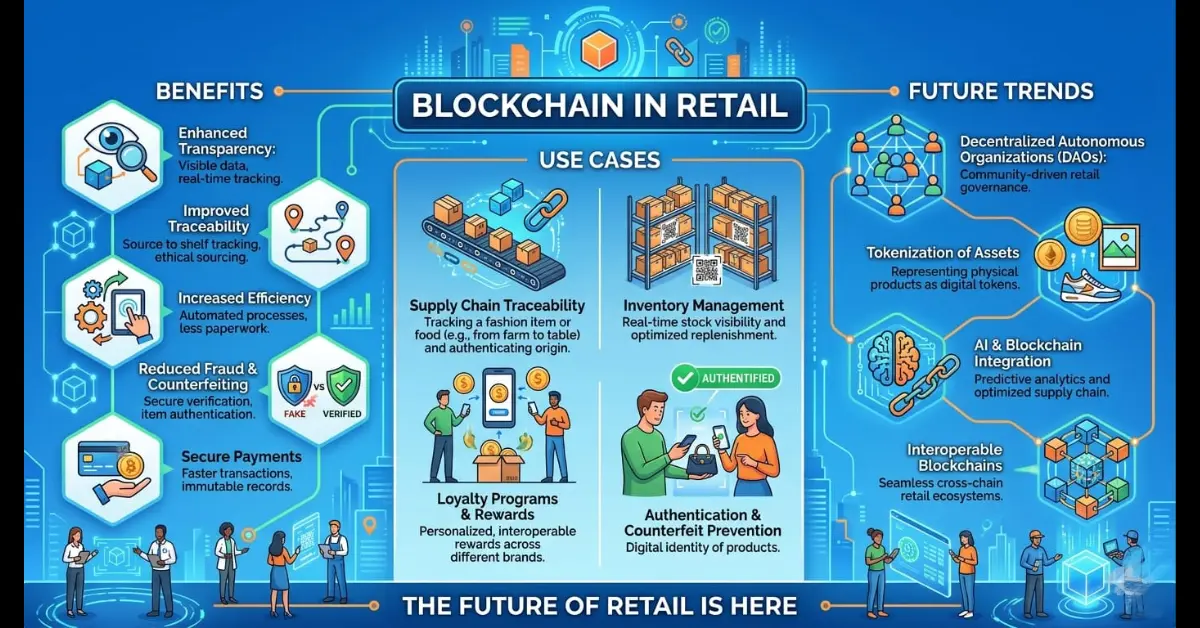
Industries like supply chain, pharmaceuticals, and food production use blockchain to track products from origin to delivery, ensuring authenticity and safety.
May be you like it:
Hi Tech Nails: Stylish, Fun, Long-Lasting Nail Tips Today
Renas Tech: Easy-to-Use Tools for Learning and Work Success Tech Tales Pro-Reed: Beginner-Friendly Tech Guides Today
Key Components of Enterprise Blockchain Solutions
A successful enterprise blockchain system typically includes:
Permissioned Blockchain Network
Controls who can join the network and what actions they can perform.
Smart Contracts
Self-executing code that automates agreements, payments, and compliance rules.
Identity & Access Management
Ensures only verified users and organizations can interact with the network.
Data Encryption
Protects sensitive business information while maintaining transparency.
Integration Layer
Connects blockchain with ERP, CRM, IoT devices, and existing databases.
Top Use Cases of Enterprise Blockchain
Financial Services
- Faster cross-border payments
- Fraud prevention
- Secure digital identity verification
Supply Chain Management
- Real-time shipment tracking
- Counterfeit prevention
- Vendor transparency
Healthcare
- Secure patient data sharing
- Drug traceability
- Insurance claims automation
Government & Public Sector
- Secure record management
- Voting systems
- Identity management
Manufacturing
- Asset tracking
- Equipment lifecycle monitoring
- Automated procurement
Benefits That Give Enterprises a Competitive Edge
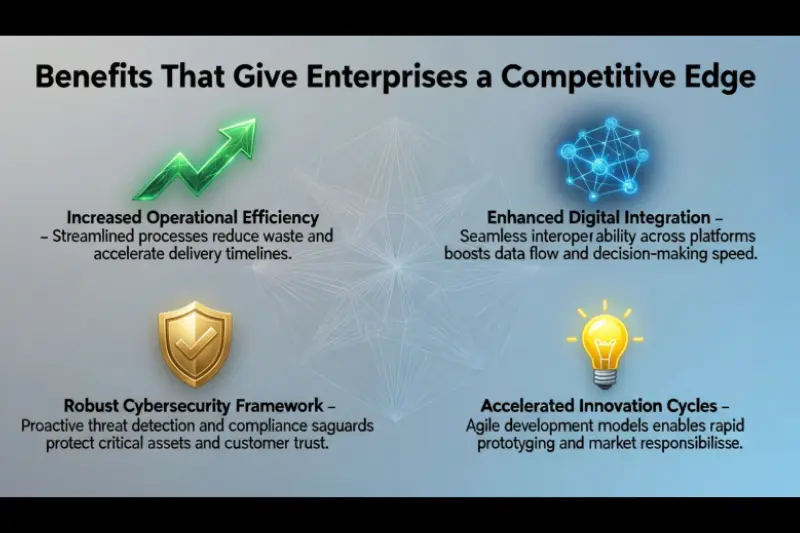
Implementing enterprise blockchain solutions helps businesses:
- Improve data security and information protection
- Lower the risk of fraud and financial losses
- Maintain regulatory compliance and governance standards
- Strengthen trust with partners and customers
- Increase operational visibility and transparency
- Drive faster digital transformation
- Elevate brand credibility and reputation
Challenges Enterprises Must Consider
While blockchain offers major advantages, enterprises should also address:
- Initial implementation costs
- Integration with legacy systems
- Regulatory uncertainty
- Scalability planning
- Skilled blockchain professionals shortage
Working with experienced blockchain solution providers helps overcome these hurdles efficiently.
The Future of Enterprise Blockchain
The future of enterprise technology is decentralized, automated, and trust-driven. As industries move toward digital ecosystems, blockchain will play a central role alongside AI, IoT, and cloud computing.
Businesses that adopt enterprise blockchain early will gain a long-term strategic advantage through stronger security, smarter automation, and improved customer confidence.
May be you like it:
Nurture Tech Tips EmbedTree: Easy Guide for Beginners
Discover Major Trends in Technology Togtechify for Beginners
Guide Digital Marketing for Small Businesses by G2G Today 24
FAQs on Enterprise Blockchain Solutions
What are enterprise blockchain solutions?
Enterprise blockchain solutions are permissioned blockchain systems designed for businesses to improve security, transparency, and efficiency while maintaining data privacy and regulatory compliance.
How is enterprise blockchain different from public blockchain?
Public blockchains are open to everyone, while enterprise blockchains are permissioned networks where only authorized participants can access, validate, and manage transactions.
Why do enterprises use blockchain technology?
Enterprises use blockchain to enhance data security, reduce fraud, automate processes through smart contracts, improve transparency, and streamline multi-party business operations.
What industries benefit most from enterprise blockchain solutions?
Industries such as finance, supply chain, healthcare, government, manufacturing, insurance, and logistics benefit significantly from blockchain adoption.
Are enterprise blockchain networks secure?
Yes. They use advanced cryptography, distributed ledgers, access controls, and consensus mechanisms to ensure tamper-proof and highly secure data management.
What are smart contracts in enterprise blockchain?
Smart contracts are self-executing programs that automatically enforce business rules, agreements, and transactions without the need for intermediaries.
Can enterprise blockchain integrate with existing systems?
Yes. Enterprise blockchain solutions are designed to integrate with ERP, CRM, cloud platforms, IoT devices, and legacy databases through APIs and middleware.
What problems does enterprise blockchain solve?
It solves issues like data silos, lack of trust between partners, manual paperwork, fraud risks, poor traceability, and inefficient cross-organization processes.
Is enterprise blockchain scalable?
Modern enterprise blockchain platforms are built with scalability features that support high transaction volumes and large networks while maintaining performance.
How does blockchain improve supply chain management?
Blockchain provides real-time tracking, product authenticity verification, improved vendor transparency, and reduced counterfeit risks across the supply chain.
Conclusion
Enterprise blockchain solutions are no longer experimental .they are a strategic necessity for organizations seeking secure digital transformation. By enabling transparency, automation, and trust at scale, blockchain empowers enterprises to operate faster, safer, and more efficiently.
Companies that embrace this technology today are building the foundation for the next generation of global business.
May be you like it:
Togtechify: Simple & Latest Tech News for Everyone
Turner Tech: Smart Automation for Faster Daily Work Flow
Tile Tech Pavers: Strong, Stylish, Durable for Your Outdoor Space