
Introduction
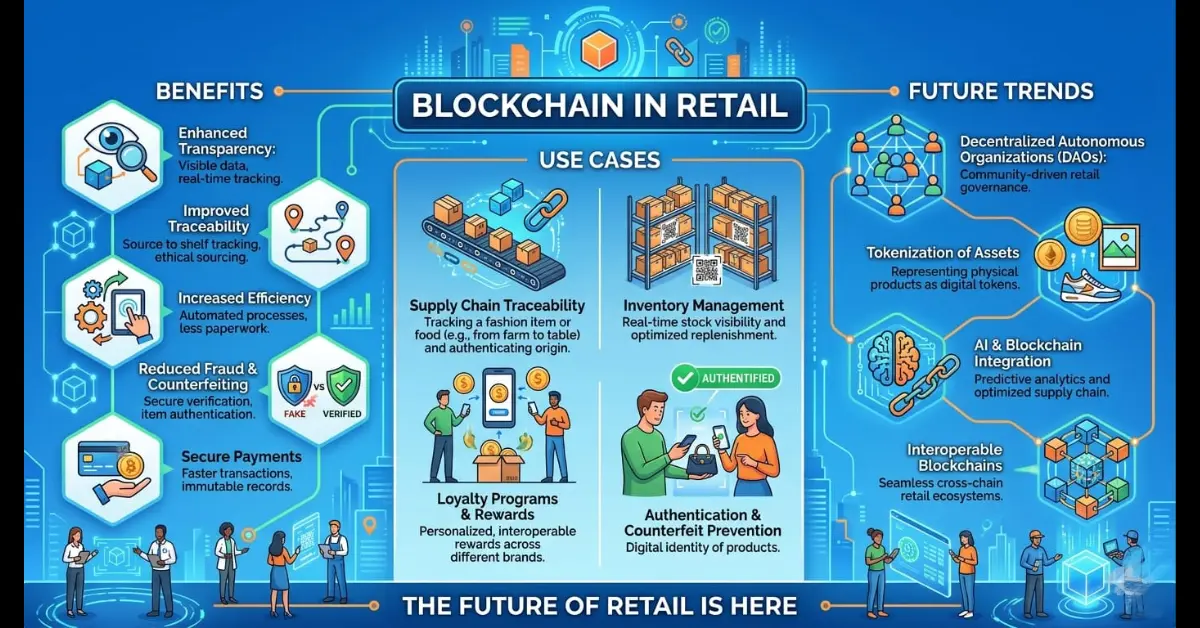
Blockchain is reshaping the retail industry by improving transparency, trust, and efficiency across every stage of the retail value chain. From supply chain tracking and product authentication to payments and customer data security, blockchain offers retailers a reliable way to solve long-standing operational challenges.
As consumers demand greater visibility and brands compete for trust, blockchain is becoming a practical tool not just a technical concept. This article explores the real-world applications, benefits, challenges, and future potential of blockchain in retail, providing a clearer and more strategic perspective than traditional explanations.
What Is Blockchain in Retail?

Blockchain in retail refers to the use of decentralized, tamper-proof digital ledgers to record and verify retail transactions, product movement, payments, and customer interactions. Unlike traditional databases, blockchain ensures that every entry is immutable, transparent, and shared across the network.
Retailers use blockchain to:
- Track products from raw materials to store shelves
- Verify product authenticity
- Strengthen payment and data security
- Improve customer loyalty ecosystems
- Support sustainability and ethical sourcing
May be you like it:
Hi Tech Nails: Stylish, Fun, Long-Lasting Nail Tips Today
Renas Tech: Easy-to-Use Tools for Learning and Work Success
Tech Tales Pro-Reed: Beginner-Friendly Tech Guides Today
Key Benefits of Blockchain in Retail
End-to-End Supply Chain Transparency
Blockchain provides a shared, tamper-proof record of every step in a product’s journey.
What retailers gain:
- Real-time tracking of goods
- Ability to identify delays or disruptions
- Greater trust between suppliers and retailers
Example:
Walmart uses blockchain to trace fresh produce, reducing traceability time from days to seconds.
Product Authentication & Anti-Counterfeiting
Counterfeit goods cost retailers billions each year. Blockchain solves this with unique product identifiers stored in a secure ledger.
Benefits include:
- Consumers can verify authenticity via QR code
- Luxury and pharmaceutical brands gain protection
- Increased brand trust
Smarter, Automated Retail Contracts
Smart contracts automate workflows such as:
- Supplier payments
- Order fulfillment
- Quality checks
When conditions are met, the contract executes automatically, reducing errors and speeding up settlements.
Improved Inventory Visibility
Blockchain gives retailers real-time, accurate inventory data across warehouses, stores, and transportation.
Results:
- Fewer stockouts
- Reduced overstocking
- Better demand forecasting
Enhanced Data Security & Privacy
Blockchain prevents unauthorized tampering with customer or transaction data.
Why this matters:
- Retail is a frequent target of data breaches
- Customers demand better control over their data
- Regulations require stronger security compliance
Next-Generation Loyalty Programs
Blockchain supports tokenized loyalty points that are easier to track, redeem, and transfer.
Advantages:
- Points are secure and transparent
- Can work across multiple brands
- Customers enjoy more flexible rewards
Faster, More Secure Payments
Blockchain can lower the cost and time of:
- Cross-border payments
- Customer-to-business transactions
- Supplier settlements
This leads to improved cash flow and reduced processor fees.
Real-World Use Cases of Blockchain in Retail
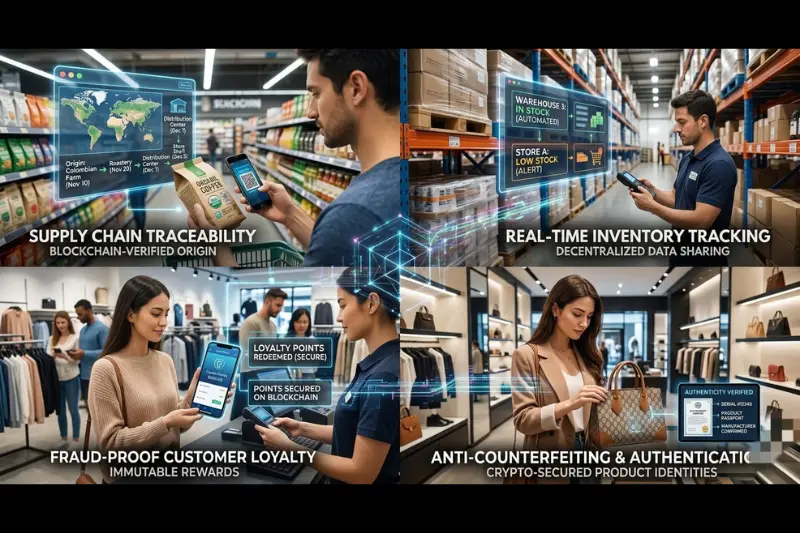
Food Safety & Traceability
Retailers verify freshness, sourcing, and temperature compliance.
Brands using it: Walmart, Carrefour, Kroger
Fashion & Luxury Goods
Blockchain protects high-value items with digital proof of ownership.
Brands: LVMH, Prada, Gucci
Ethical & Sustainable Sourcing
Companies track:
- Carbon footprint
- Fair-trade certifications
- Eco-friendly materials
Brands: Patagonia, Stella McCartney
E-commerce Fraud Prevention
Blockchain secures payment data, user identity, and product reviews.
How Retailers Can Implement Blockchain: A Simple Framework
Step 1: Identify Use Cases
Common starting points include:
- Supply chain tracking
- Loyalty program modernization
- Product authentication
Step 2: Choose the Right Blockchain Platform
Options include:
- Ethereum
- Hyperledger Fabric
- Polygon
- IBM Food Trust
Step 3: Start with a Pilot Program
Test the solution with a single product line or supplier network.
Step 4: Integrate with Existing Systems
The blockchain must work with:
- ERP
- POS
- Warehouse management systems
Step 5: Scale Across the Business
Once tested, extend to suppliers, distributors, and partner retailers.
Challenges of Blockchain in Retail
While powerful, blockchain is not without limitations.
Integration Complexity
Legacy retail systems may require significant updates.
High Initial Investment
Blockchain solutions involve costs for training, development, and data migration.
Scalability Issues
Some blockchains struggle with high transaction volumes.
Supplier Adoption
Blockchain only works when the entire supply chain participates.
Future Outlook: What’s Next for Blockchain in Retail
The future of blockchain in retail points toward deeper integration with advanced technologies, including:
AI + Blockchain
Improved demand forecasting, fraud detection, and automated retailer decisions.
IoT + Blockchain
Sensors capturing real-time product conditions (temperature, location, humidity).
Digital Twins
Retailers using blockchain-backed digital models of supply chain operations.
Tokenized Retail Economies
Customers using digital tokens for loyalty, returns, and brand interactions.
Blockchain will continue shifting from experimental to mainstream as retailers prioritize transparency, sustainability, and data security.
May be you like it:
Nurture Tech Tips EmbedTree: Easy Guide for Beginners
Discover Major Trends in Technology Togtechify for Beginners
Guide Digital Marketing for Small Businesses by G2G Today 24
FAQs on Blockchain in Retail
What is blockchain in retail?
Blockchain in retail is the use of decentralized digital ledgers to improve transparency, security, and efficiency.
How does blockchain improve supply chain tracking?
It provides real-time, tamper-proof product tracking from source to store.
Why is blockchain important for product authenticity?
It helps verify genuine products and reduces counterfeiting.
Can blockchain reduce retail fraud?
Yes, it secures transactions and minimizes data manipulation or payment fraud.
How does blockchain benefit customer loyalty programs?
It automates and secures loyalty points using smart contracts.
Is blockchain useful for inventory management?
Yes, it offers accurate, real-time inventory visibility.
Does blockchain lower retail costs?
It reduces middlemen, errors, and administrative overhead.
Can blockchain enhance customer trust?
Yes, by offering transparent product origins and secure data handling.
Is blockchain adoption expensive for retailers?
Initial costs can be high but deliver long-term savings and efficiency.
What is the future of blockchain in retail?
Widespread use for supply chains, digital payments, and automated retail operations.
Conclusion
Blockchain is not just a technological trend it is a strategic asset transforming how retailers manage supply chains, secure data, authenticate products, and build customer trust.
Retailers who adopt blockchain early will gain significant advantages: better operational efficiency, improved transparency, and stronger customer loyalty. As the marketplace becomes more transparent and competitive, blockchain will serve as a foundation for the next generation of retail innovation.
May be you like it:
Togtechify: Simple & Latest Tech News for Everyone
Turner Tech: Smart Automation for Faster Daily Work Flow
Tile Tech Pavers: Strong, Stylish, Durable for Your Outdoor Space